
Southern California living is hard to beat. We get an average of 284 days of sunshine a year, which is spectacular for our brunch plans, beach days, and hiking habits. However, that beautiful Pacific sunshine comes with a catch: high-intensity UV exposure.
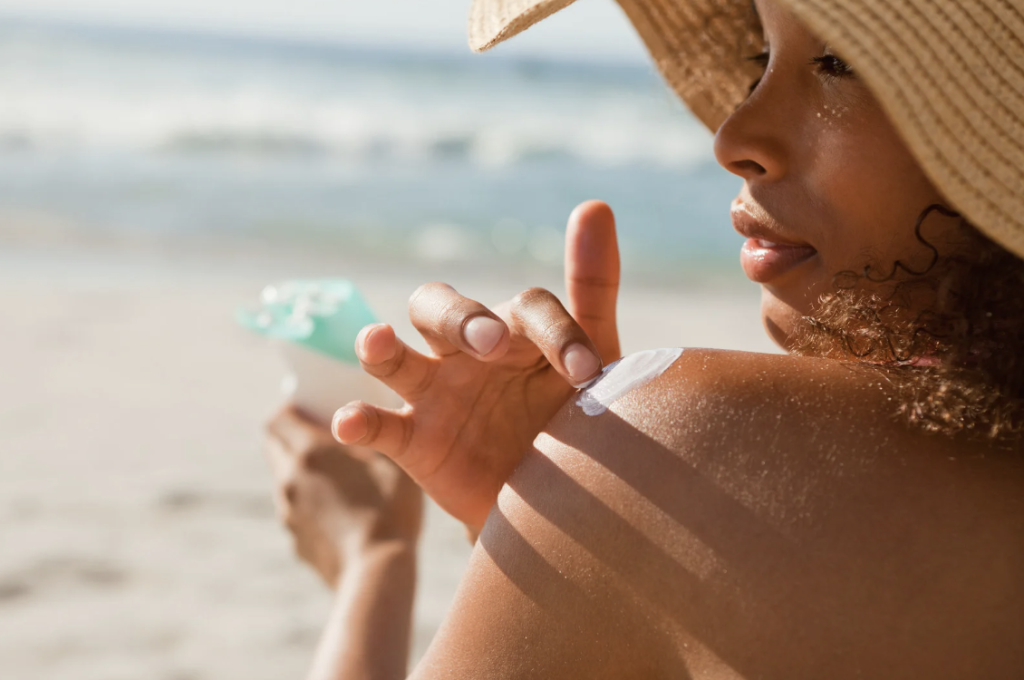
Protecting your skin doesn’t mean you have to hide indoors. To keep your skin healthy, vibrant, and cancer-free, you need a solid defense strategy. Let’s dive into everything you need to know about sun safety in SoCal.
The “Base Tan” Myth: Let’s Demystify the Glow
First things first. Let’s address the golden elephant in the room: the infamous “base tan.”
The Hard Truth: A base tan is a medical myth. There is no such thing as a safe tan.
Many people believe that getting a light tan at the start of the season protects them from severe sunburns later on. In reality, a tan is your skin’s biological SOS signal. When UV radiation penetrates your skin, it damages your cellular DNA. Your skin responds by producing melanin to try and prevent further mutation.
- The protection level: A base tan only provides an SPF equivalent of about 3 to 4.
- The cost: To get that measly SPF 3, you’ve already caused irreversible cellular damage, accelerated skin aging, and increased your skin cancer risk.
Why Sunscreen is Your SoCal Wingman
Sunscreen isn’t just about avoiding the immediate agony of looking (and feeling) like a boiled lobster. The daily benefits run much deeper:
- Cancer Prevention: Daily use reduces your risk of developing squamous cell carcinoma by about 40% and melanoma (the deadliest skin cancer) by 50%.
- The Ultimate Anti-Ager: Roughly 90% of visible skin aging—think fine lines, deep wrinkles, sagging, and leathering—is caused by UV rays. Sunscreen is quite literally the cheapest, most effective anti-aging product money can buy.
- Complexion Perfection: It prevents hyperpigmentation, sunspots, and melasma from darkening, ensuring your skin tone stays even and bright.
Deciphering the Numbers: What is the Best SPF?
Walk into any local surf shop or beauty counter, and you’ll find SPFs ranging from 15 to 100+. What actually works for the SoCal climate?
Dermatologists generally recommend using a minimum of SPF 30 to SPF 50 for daily life.
| SPF Level | UVB Rays Blocked | Best Used For |
| SPF 15 | ~93% | Quick indoor errands or short commutes |
| SPF 30 | ~97% | Daily wear, morning walks, casual outdoor dining |
| SPF 50 | ~98% | Beach days, surfing, hiking, or extended outdoor activities |
| SPF 100 | ~99% | Individuals with extreme sun sensitivity or a history of skin cancer |
Note: No sunscreen blocks 100% of UV rays. Anything above SPF 50 offers only a marginal increase in protection and can give a false sense of security. Always ensure your bottle says “Broad Spectrum”, meaning it protects against both UVA rays (which age you) and UVB rays (which burn you).It’s a common misconception that SPF 100 is twice as protective as SPF 50. In reality, SPF 50 blocks about 98% of UVB rays, while SPF 100 blocks 99%—a measly 1% difference.
The real downside of ultra-high numbers is the false sense of security. It tempts people into thinking they are invincible, leading them to bake all day at the beach without reapplying. Instead of chasing the highest number on the shelf, stick to the SPF 30 to 50 sweet spot and focus on proper, frequent reapplication.
The Proper Way to Apply (Because You’re Probably Underdosing)
Buying a great sunscreen is only half the battle; you have to use enough of it to actually get the number on the bottle.
- The Two-Finger Rule: For your face and neck, squeeze out two steady lines of sunscreen along your index and middle fingers. That is the exact amount required for proper facial coverage.
- The Shot Glass Rule: For your body, you need about one full ounce (the size of a standard shot glass) to cover all exposed skin.
- The 2-Hour Replay: Sunscreen breaks down in the sun and washes away with sweat or ocean water. You must reapply every two hours, or immediately after swimming at Zuma or Huntington Beach.
Ingredients to Avoid
Not all sunscreens are created equal. When checking labels, keep a lookout for these troublemakers:
- Oxybenzone & Octinoxate: These chemical filters are known to contribute to coral reef bleaching. If you are swimming in the ocean, swap them out for reef-safe alternatives. They are also heavily scrutinized as potential hormone disruptors.
- Artificial Fragrances & Parabens: If you have sensitive skin or conditions like eczema, the combination of harsh fragrances and intense heat can trigger major contact dermatitis flare-ups.
- Benzene Contamination: While not an intentional ingredient, benzene (a known carcinogen) has occasionally contaminated certain aerosol spray sunscreens during manufacturing. Stick to reputable brands and check recent recall lists.
Top 3 Sunscreens That Stand Out From the Herd
If you want protection that doesn’t feel like sticky grease or leave you looking like a ghost, these three formulations are game-changers for the Southern California lifestyle:
1. EltaMD UV Clear Broad-Spectrum SPF 46
- What separates it from the herd: It is the undisputed holy grail of dermatologist recommendations. Formulated with zinc oxide, niacinamide (vitamin B3), and hyaluronic acid, it doesn’t just protect your skin—it actively calms redness, clears up acne-prone complexions, and hydrates without oiliness. It leaves zero white cast and sits seamlessly under makeup or a baseball cap.
2. ISDIN Eryfotona Actinica SPF 50+
- What separates it from the herd: This is medical-grade luxury in a bottle. Alongside broad-spectrum mineral protection, it features “DNA Repairsomes”—plankton-derived enzymes clinically proven to help repair existing actinic sun damage while shielding you from new exposure. It has an ultra-lightweight, milky texture that absorbs into the skin instantly.
3. Colorescience Sunforgettable Total Protection Brush-On Shield SPF 50
- What separates it from the herd: Reapplying liquid sunscreen over a full face of makeup or while sitting at an outdoor brunch in Venice is an absolute nightmare. This is a 100% mineral powder sunscreen housed inside a portable brush applicator. You simply dust it over your skin to absorb mid-day oil, mattify your face, and instantly refresh your sun protection on the go.
Self Tanner?
If you want a sun-kissed glow for a weekend in Palm Springs, reach for a bottle of self-tanner instead. If you still want that classic bronzed look without the DNA damage, modern self-tanners have come a long way from the streaky, orange, chemical-smelling formulas of the past. Today’s options deliver a flawless, natural glow that will fool everyone into thinking you just spent a week in Cabo. For a deep, olive-toned beach vibe, Loving Tan Deluxe Bronzing Mousse is a local favorite that develops quickly and fades evenly. If you are short on time, St. Tropez Self Tan Express Mousse lets you control your shade (from light glow to deep bronze) depending on whether you rinse it off after one, two, or three hours. Coco and Eve Sunny Honey Bali Bronzing Set is awesome for an easy, flawless, overnight application that looks as natural as a day on the beach.
Again, being sun smart doesn’t mean you have to avoid the outdoors. Grab a wide-brimmed hat, slather on your favorite SPF, and enjoy everything SoCal has to offer safely!